
When Taste Gets Complicated: With Gräfling

When Taste Gets Complicated: With Gräfling

WORDS
Sharon Glover
THE PAPER
Conversation
14th October 2026

Johanna and Friedrich Gräfling were collectors before they were designers. They began buying art as students, more than fifteen years before establishing their studio, and have since built a collection of more than 600 works. This is evident in every part of their practice, from their design studio in Frankfurt, to a gallery within their own apartment, and a non-profit exhibition space in rural Bavaria, experienced only by those willing to make the journey.

Interior designers are often expected to have a broad knowledge of their discipline and to make informed decisions across it. But no designer can be an expert in everything. Developing a deep understanding of art can take years of specialist experience, exposure and training, something many designers haven't had the opportunity to acquire.

The usual advice on art in interiors covers scale, placement and when a piece should enter the design process. But how much should a designer impose their own design judgement, and when should they step back and respect a client's emotional attachment to a piece, even if it doesn't align with the scheme?

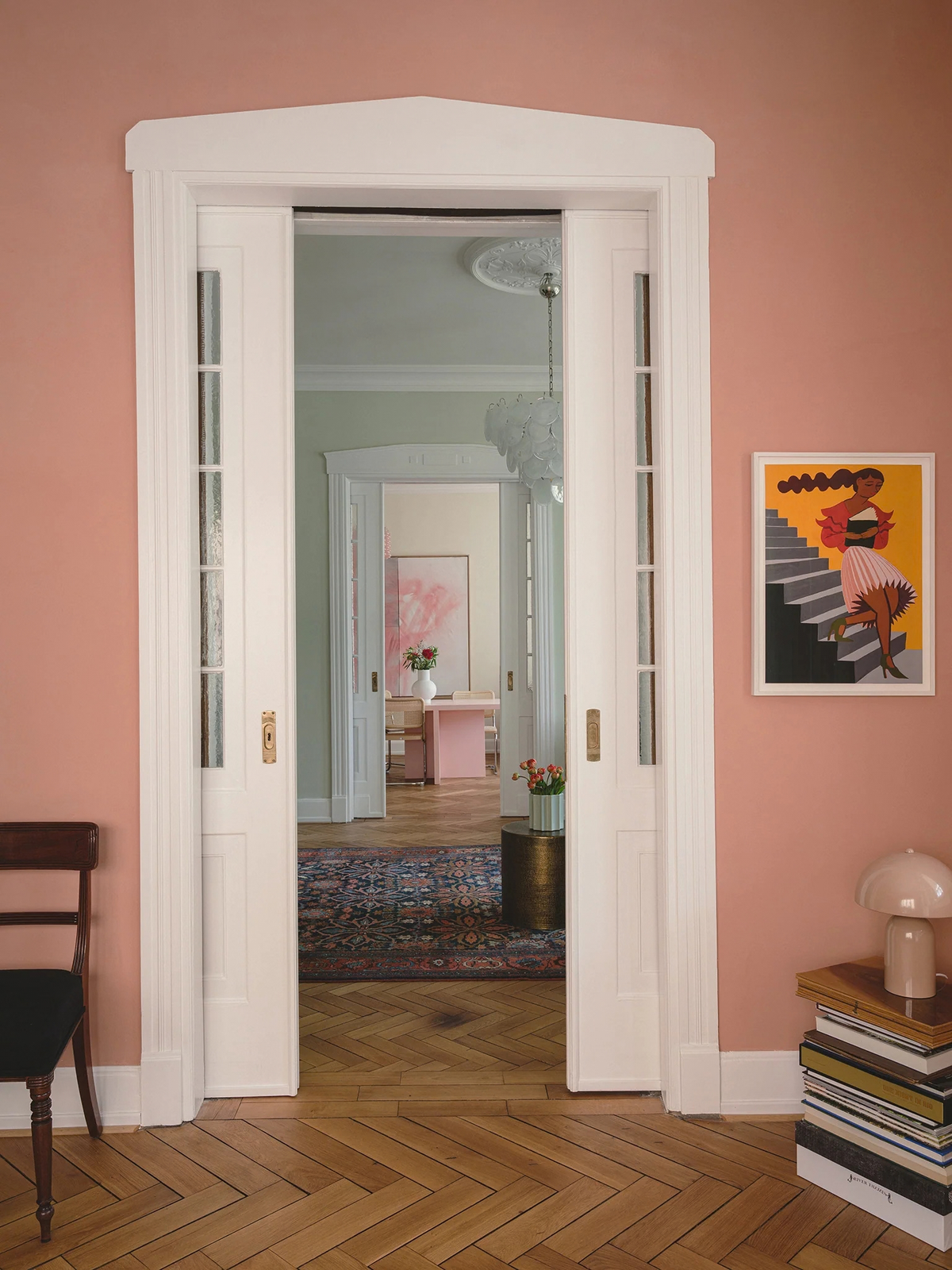
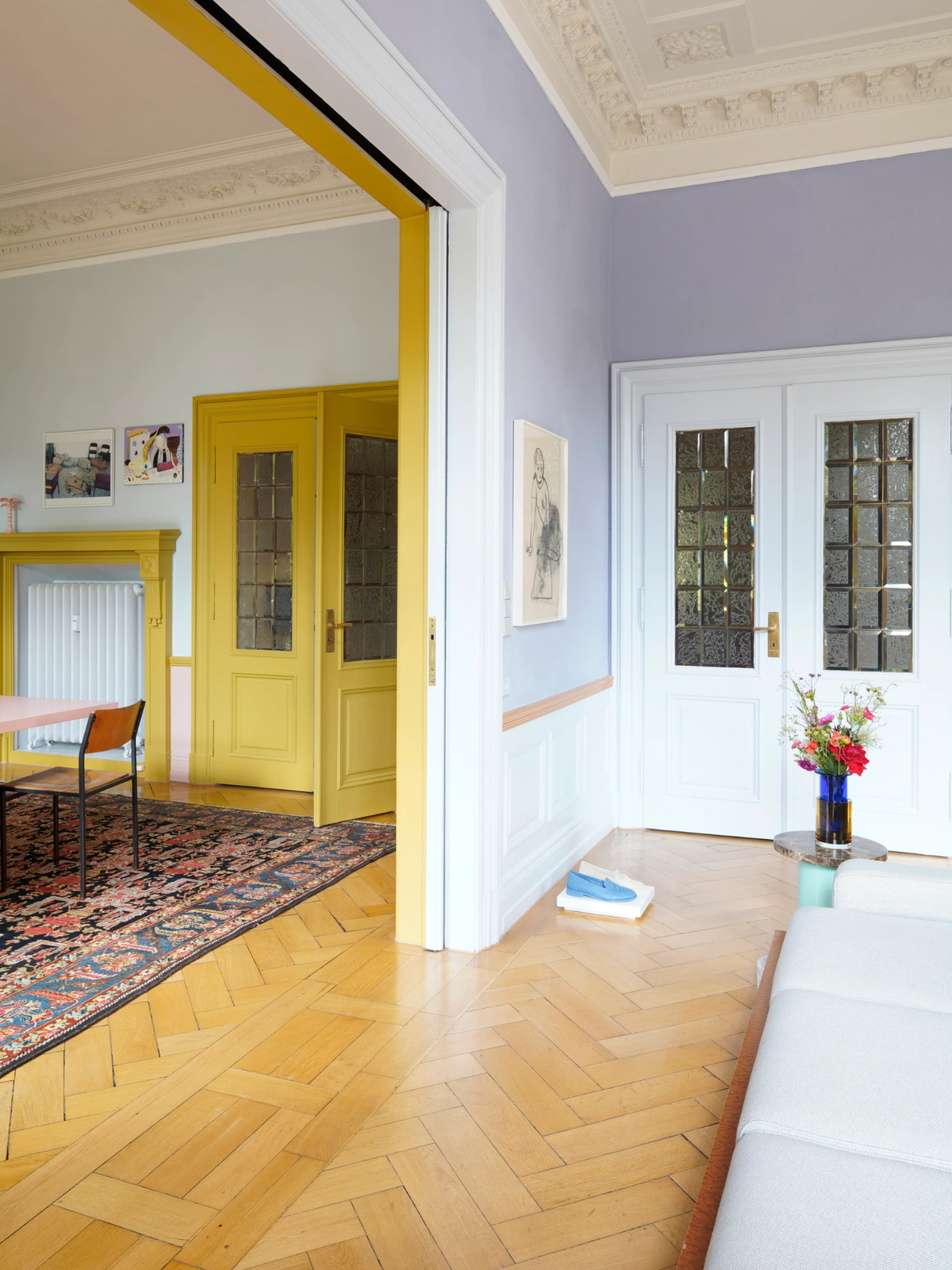
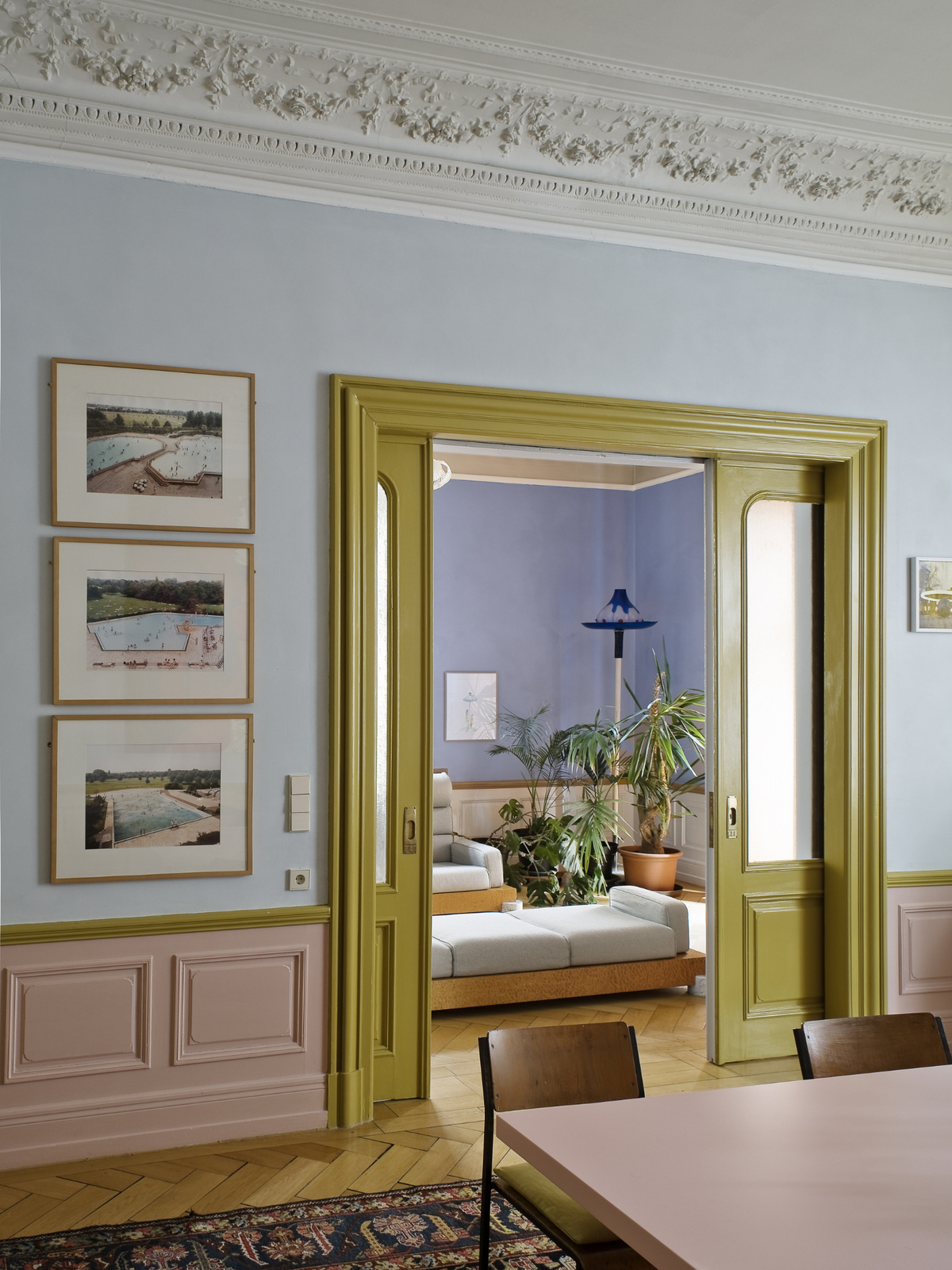
Haus Offenbach, Photography by Wolfgang Stahr
Pied-à-terre Kennedy, Photography by Igmar Kurts

CR: As collectors and designers, how do you balance your own taste with what is right for a client and their home?

G: We usually assume that clients come to us because they are familiar with our work and have chosen to engage with our aesthetic and way of designing. We feel it's important not to remove ourselves from our projects. As much as they belong to the people commissioning us, we also want to feel connected to the work.

In that sense, when meeting clients we never begin by asking what look they are trying to achieve. What we want to understand instead is how they live. How they move through a house, if they entertain, how private or open different rooms need to be, whether they have children, what needs to function practically, and which routines shape their everyday life. Of course, we also want to know and be conscious of any particular colours or materials they genuinely dislike. But we are much less interested in asking someone to define a desired look.

Our role is to translate a client's life rather than simply reproduce their taste. The most interesting projects happen when their personality, habits and needs meet our own visual and spatial language. The result should feel unmistakably like them, but it should also carry our DNA.

CR: Can you share a project where a piece of art influenced the direction of the interior?

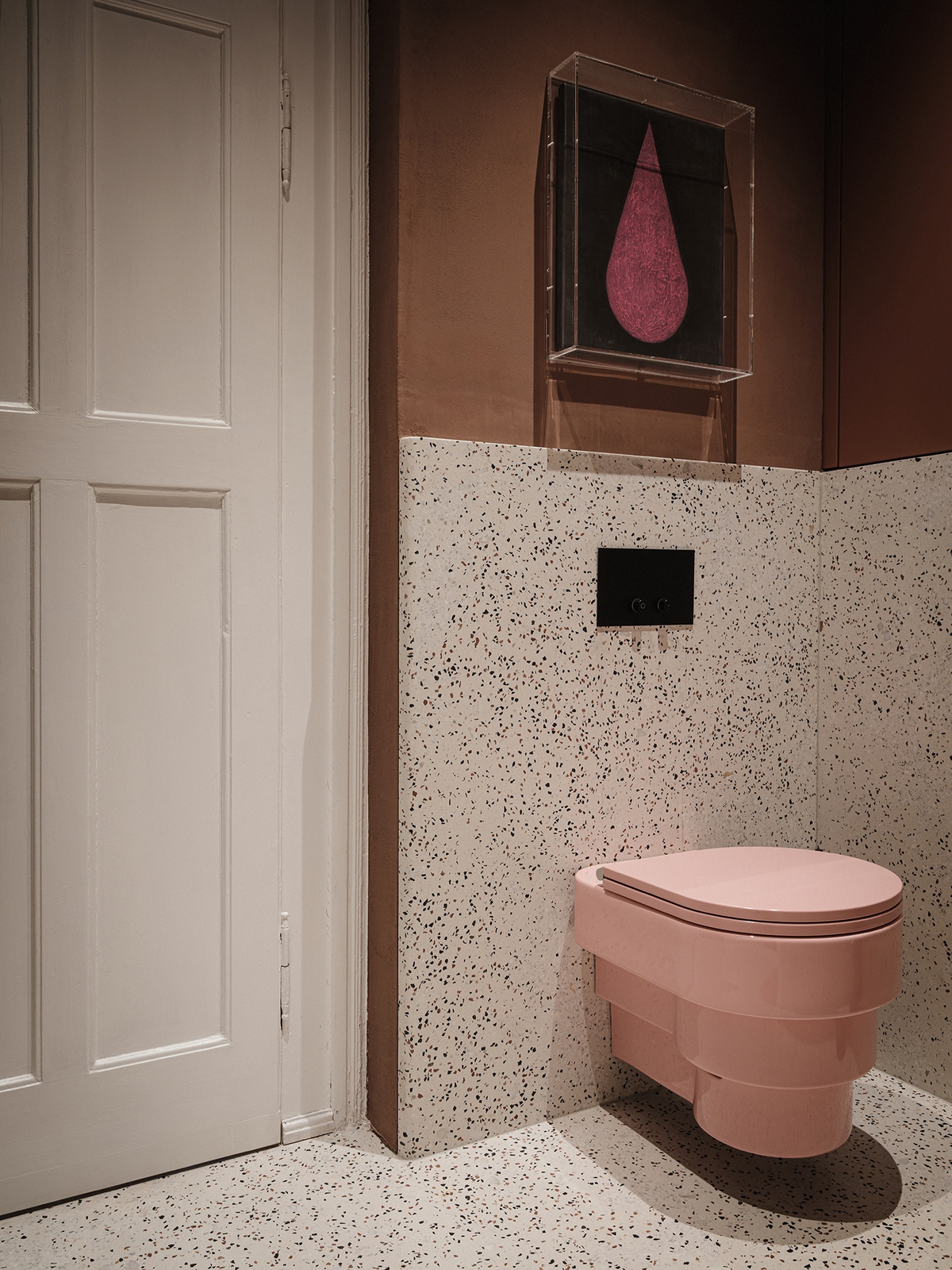
G: In our Tulpenhof project, the guest bathroom was developed very directly around a work by Michael Sailstorfer. The piece is a sculptural cloud, and we deliberately designed the proportions of the room so that it would feel almost too large for the space, slightly compressed, as though it had become caught between the walls. That tension became part of the character of the room rather than something we tried to resolve. From there, the artwork began to inform other decisions. We introduced black fittings, while the terrazzo contains a black aggregate that subtly relates back to the work. Above the basin, rather than using a conventional mirror, we hung a paper work from Sailstorfer's Celebrity series.

What interested us was not matching the interior to the artwork visually, but allowing the artwork to alter the spatial logic of the room. It became a starting point for thinking about proportion, material and atmosphere.

CR: How do you decide when an interior needs another layer, and when it needs restraint?

G: For us, restraint doesn't necessarily mean less. A room can contain strong colours, contrasting materials, furniture, art and quite a lot of visual information, and still feel very controlled. It is more about hierarchy. You need to understand which elements are allowed to speak loudly and which need to remain quiet.

Often, another layer is needed when everything in a room is operating at the same volume. Equally, something has to be removed when several elements are competing for the same attention. Restraint, for us, is therefore less about reduction and more about precision. It is knowing what the room needs, and equally what it doesn't.

"You don't collect art because you have an empty wall. You collect because you develop a relationship with an artist, an idea, a work, a particular moment or a way of seeing the world. The architecture then has to learn how to live with that collection - not the other way around."

CR: What do you do when a client has more art than space to display it? How do you decide what deserves to be seen?

G: We don't believe a collection needs to justify itself through permanent display. You don't collect art because you have an empty wall. You collect because you develop a relationship with an artist, an idea, a work, a particular moment or a way of seeing the world. The architecture then has to learn how to live with that collection - not the other way around. So having more art than wall space isn't really a problem for us. In fact, it can be a sign of a living collection.

We are very comfortable with works being stored and rotated. Not seeing something for a year or two can completely change the encounter when it returns. A collection should have a sense of movement rather than feeling fixed. When deciding what is shown, we don't simply select the most important or valuable works. We look at what a particular piece does within a room: how it changes the scale, atmosphere or rhythm of a space, what relationship it creates with the architecture, and what happens when it sits alongside another work.

Sometimes one very strong piece needs an entire wall. Sometimes a seemingly modest work becomes the most important thing in a room. The aim is never to display as much art as possible. It is to create the conditions in which you can actually see it and appreciate it.

Pied-à-terre Kennedy, Photography by Igmar Kurts
Haus Offenbach, Photography by Wolfgang Stahr

"These moments can actually be incredibly important. They stop an interior from becoming too controlled or looking as though one person selected everything at the same time. A home needs a little contradiction. Those are often the things that make it feel genuinely lived in."

CR: How do you approach situations when a client chooses a piece you would not have selected yourself but which has deep personal meaning for them?

G: Personal meaning is often much more interesting in a home than perfect taste. If an object or artwork genuinely matters to a client, we would never want to edit it out simply because we wouldn't have chosen it ourselves. Instead, our role becomes finding the context in which it can feel intentional.

These moments can actually be incredibly important. They stop an interior from becoming too controlled or looking as though one person selected everything at the same time. A home needs a little contradiction. Those are often the things that make it feel genuinely lived in.

CR: When commissioning a piece for a specific interior, how do you navigate the relationship between the artist's vision, the client's aspirations and the character of the space?

G: We would never ask an artist to simply produce something that matches an interior. For us, a commission becomes interesting when the artist is invited to engage with the space, either physically or conceptually. Architecture can offer a dimension, a particular location, a material condition, a view, a history or even a problem - but it should be a starting point for the artist rather than a brief that predetermines the outcome.

The artist, the client and the space should remain three independent voices. The most successful commissions happen when those three positions begin to influence one another without one becoming subordinate to the others. There needs to be enough freedom for something unexpected to emerge.

CR: What is the hardest thing to edit out of an interior — and how do you decide what stays?

G: The hardest thing to remove is anything you love, but that doesn't work in the space. It's easy to edit out the wrong material, the wrong piece of furniture or an idea that simply isn't working. It's much harder when you have two beautiful things that are individually convincing but somehow weaken one another when they are brought together. We try to ask what the room or project needs, rather than which individual element we are most attached to. Sometimes a very good piece of furniture, a material we love or an idea we've spent a long time developing simply has to disappear because the room becomes stronger without it.

Perhaps this is where designing an interior comes closest to curating an exhibition - not everything that is good needs to be included. The challenge is knowing what to leave out.