Hand, Pen and Paper: With Amanda Doll Charrin

Hand, Pen and Paper: With Amanda Doll Charrin

WORDS
Lauren Rhodes
THE PAPER
Conversation
4th June 2026

Amanda Doll Charrin is an American interior designer and architectural illustrator based in Connecticut, with a presence in New York and Paris. From her studio, established in 2022, she designs her own interior projects and is increasingly commissioned by leading designers and brands to illustrate theirs. Her work moves between art, fashion and architecture, with the discipline of traditional drafting and a sensibility that is unmistakably her own. At a moment when design imagery has never been more digital, Charrin's practice points to what the pencil still does best. The appetite for analogue is back, and we suspect it's here to stay.

Our conversation moves through the practical and the instinctive: the tools Charrin uses, the way a drawing begins, what it means to interpret another designer’s work, and why a room reads differently when it is drawn by hand.

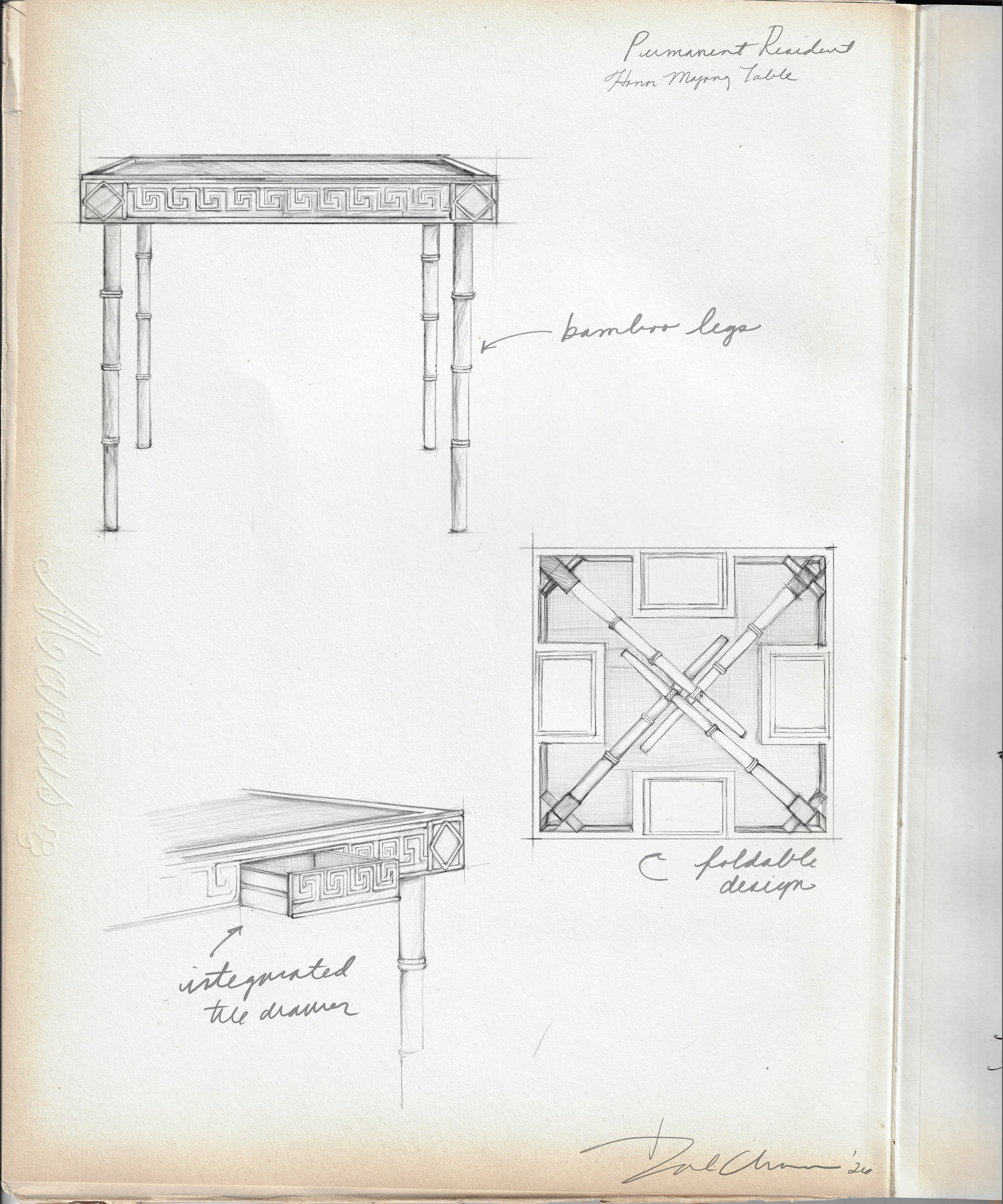
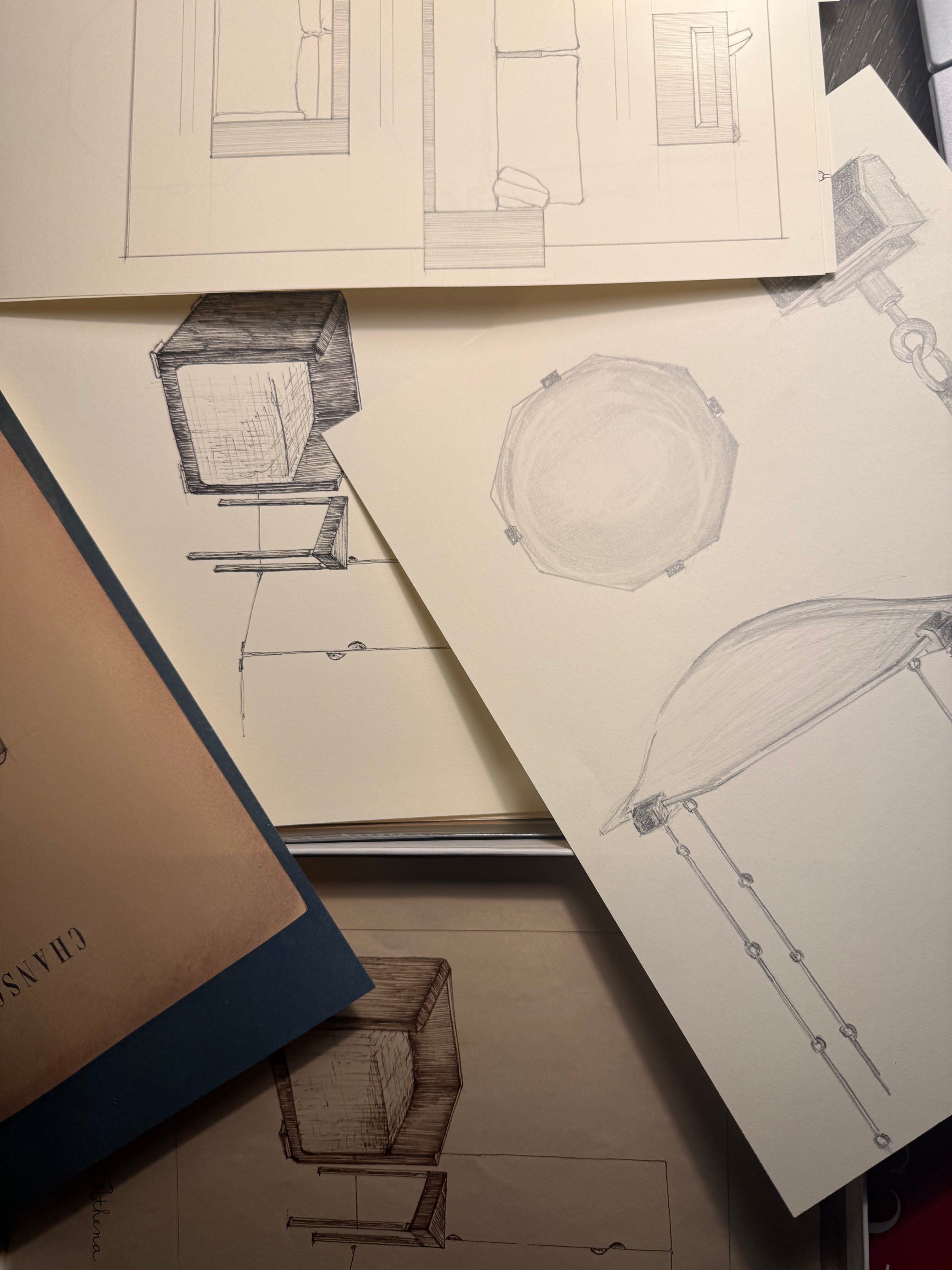
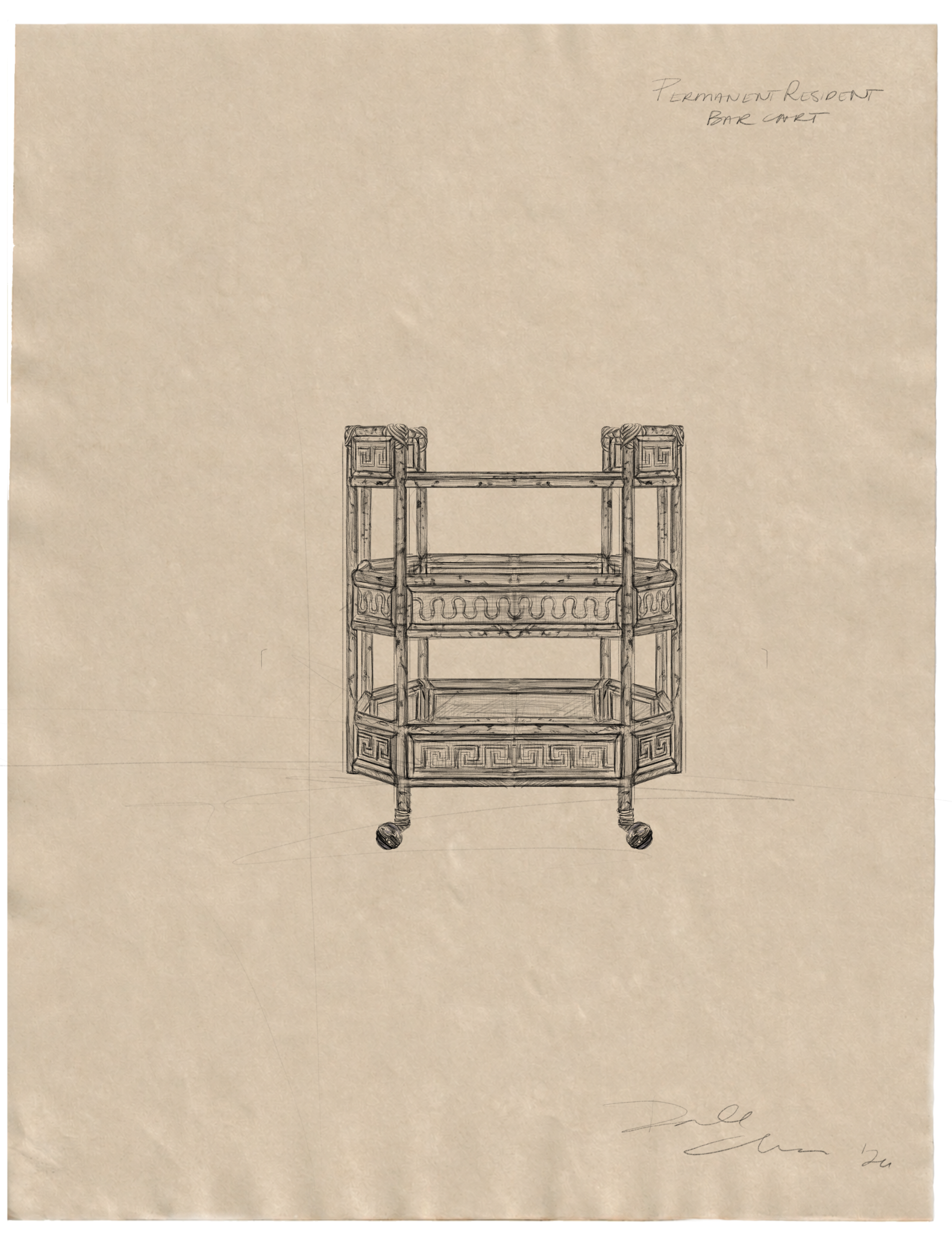
Image credit: Amanda Doll Charrin for Permanent Resident

CR: As someone who works both as a designer and as an illustrator other designers commission, what does each side of the work give the other?

ADC: Illustrating from an architectural mindset is really at the core of my work. When I draw for other designers, my goal is to visually express the look, feeling, and intention behind their work — almost as if the project is still living within the conceptual design process rather than existing as a fixed final rendering. Because I’m also an interior designer, the process often becomes collaborative, where we’re able to refine ideas and work through design details together along the way.

CR: Where does your eye come from? Beyond design itself, the things, places and people that have shaped how you see.

ADC: My eye is deeply shaped by experience and the people around me. Growing up in the South, I was surrounded by formal decorating and hosting traditions, while my twenty-plus years in New York encouraged me to challenge those ideas and develop my own perspective. Now living between Connecticut and Paris, the juxtaposition of the two feels endlessly inspiring creatively.

Nearly everyone in my family and close circle works in a creative field, from artists and architects to jewelry and furniture designers. After spending time with them, I always leave seeing things a little differently and inspired.

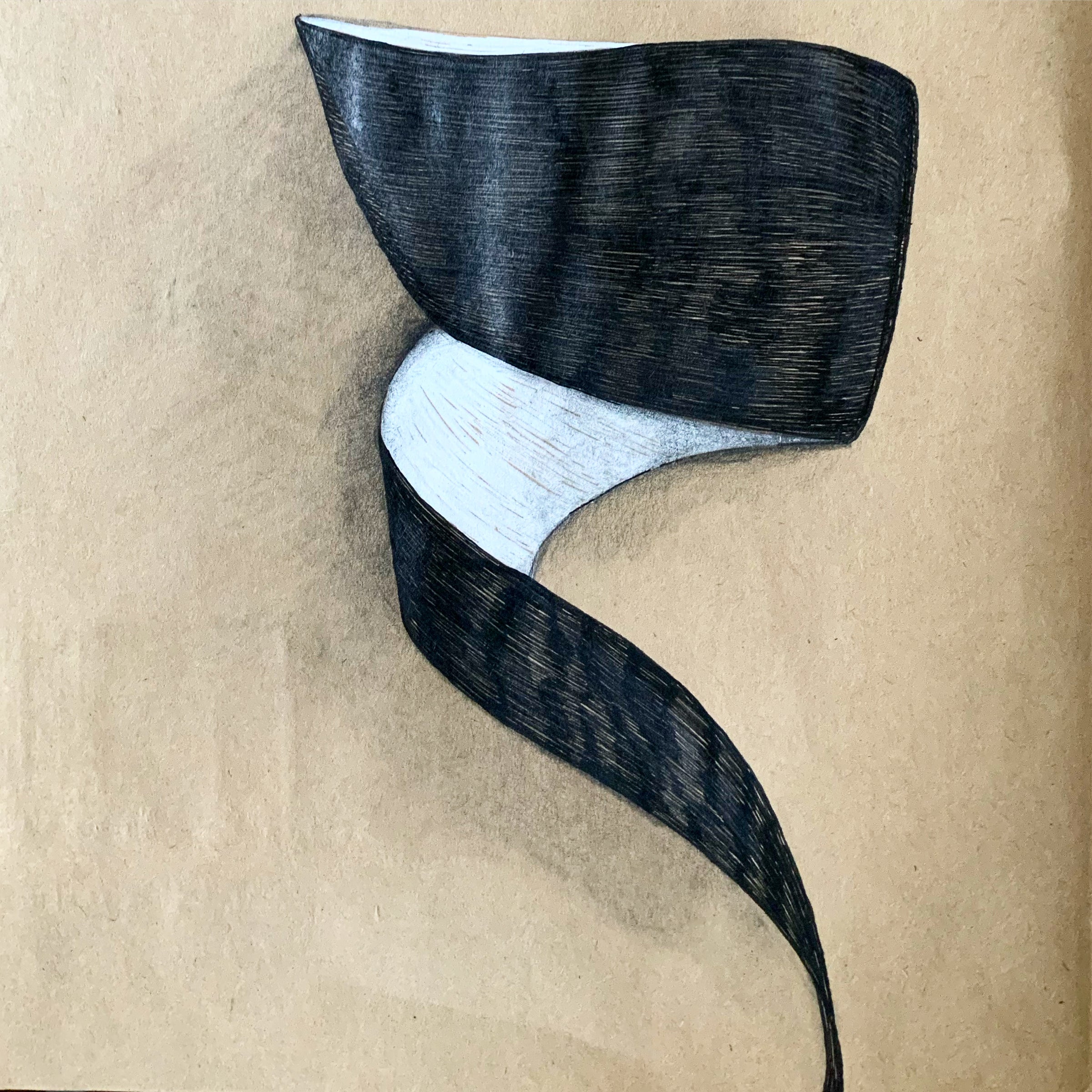
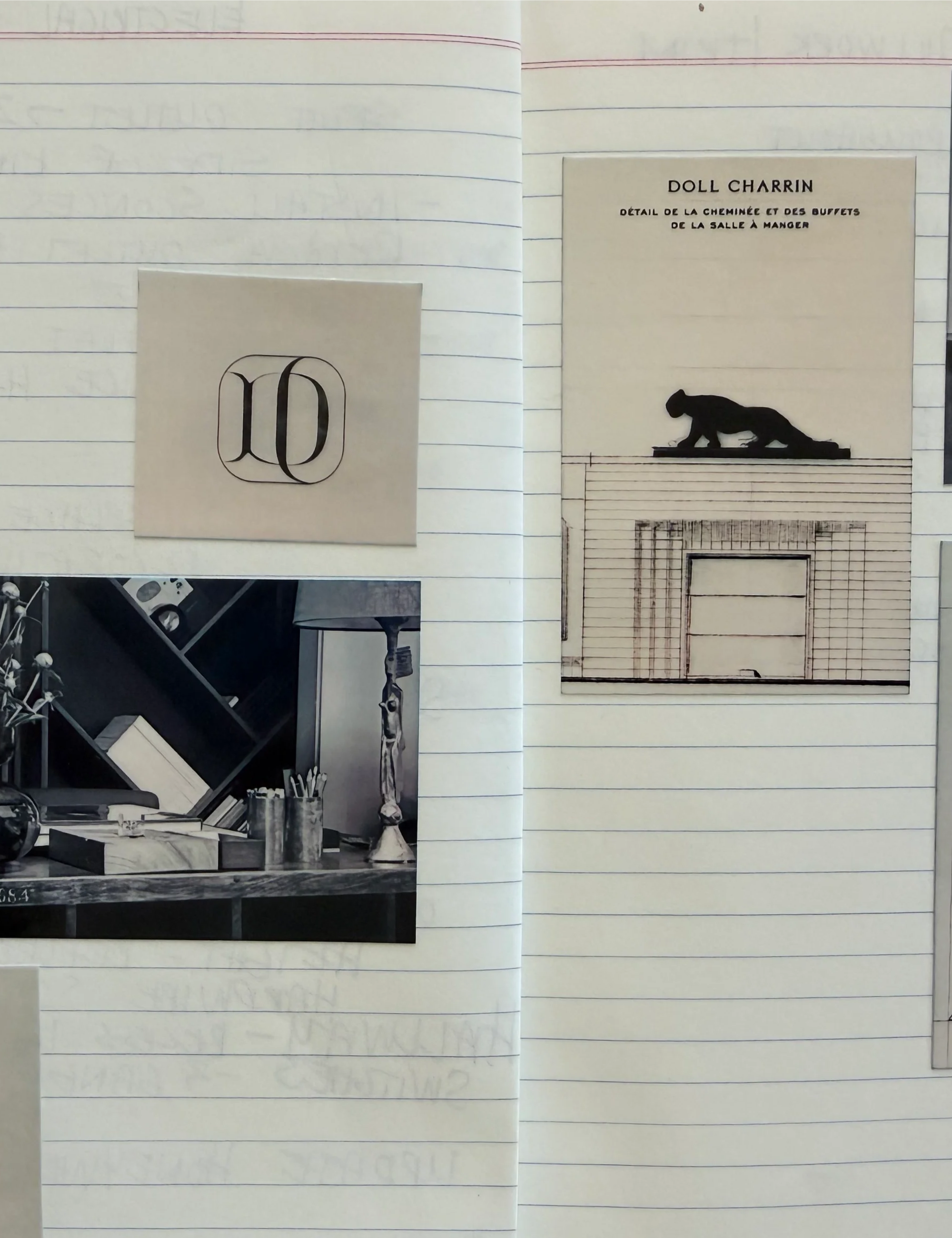
Image credit: Amanda Doll Charrin

"I also try to spend as much time as possible off screen, whether that’s wandering through antique bookstores and old print shops, visiting galleries and shops, or simply being in nature. "
CR: Working across other studios, you see how different designers gather references and shape the direction of their projects. At a time when so much inspiration circulates through the same places, where do you think designers should be looking if they want to develop a richer point of view?

ADC: Instagram and Pinterest are great tools for inspiration and for sharing work, but algorithms can also limit discovery of the unexpected. I actually love grabbing a friend's phone and scrolling their algorithms! It's super inspiring and I find many new accounts I didn't know about or images that I would have never seen. 

I also try to spend as much time as possible off screen, whether that’s wandering through antique bookstores and old print shops, visiting galleries and shops, or simply being in nature. Working in a notebook has really helped me with sitting with my thoughts and ideas and not leaning so much on apps and AI. 

CR: Your work was once much more rooted in 3D renders, and is now almost entirely hand renderings and sketches. What made you move away from digital images, and what can drawing communicate that a render cannot?

ADC: When I was younger, I would hand-render drawings and poché plans for my father, who is an architect (he apprenticed in the '70s and still drafts by hand today). Since then, I’ve naturally layered both digital and hand drawing into my work. Digital rendering is incredibly useful for studying perspective, understanding how light moves through a room, and blocking out layouts, and it remains an important part of my process today. I also like to use Procreate when I am on the go. 

At the same time, many clients have become desensitized to the manufactured quality of AI imagery. I think there is an inevitable return toward a more personal and romantic way of interpreting space, one that focuses less on perfection and more on how a room is actually meant to feel.

CR: Where do your hand renderings tend to sit in a project: early concept, client presentation, final design, or somewhere across the whole process? How does their role change depending on the stage?

ADC: Hand-renderings in my personal practice begin at the very start of a project. I use them to think through ideas, study proportions, or quickly sketch something during a client meeting.

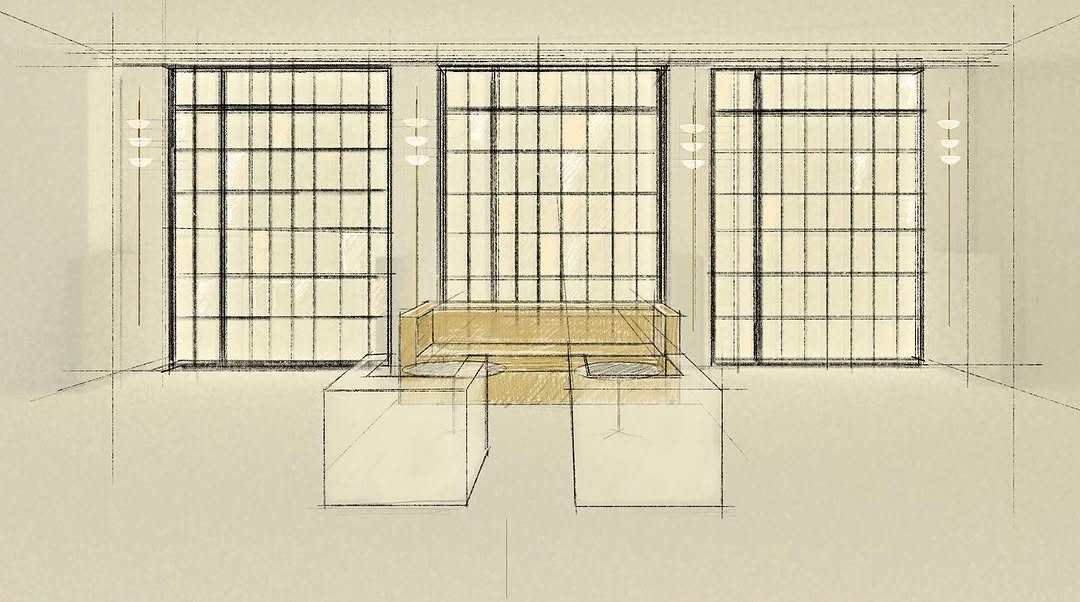
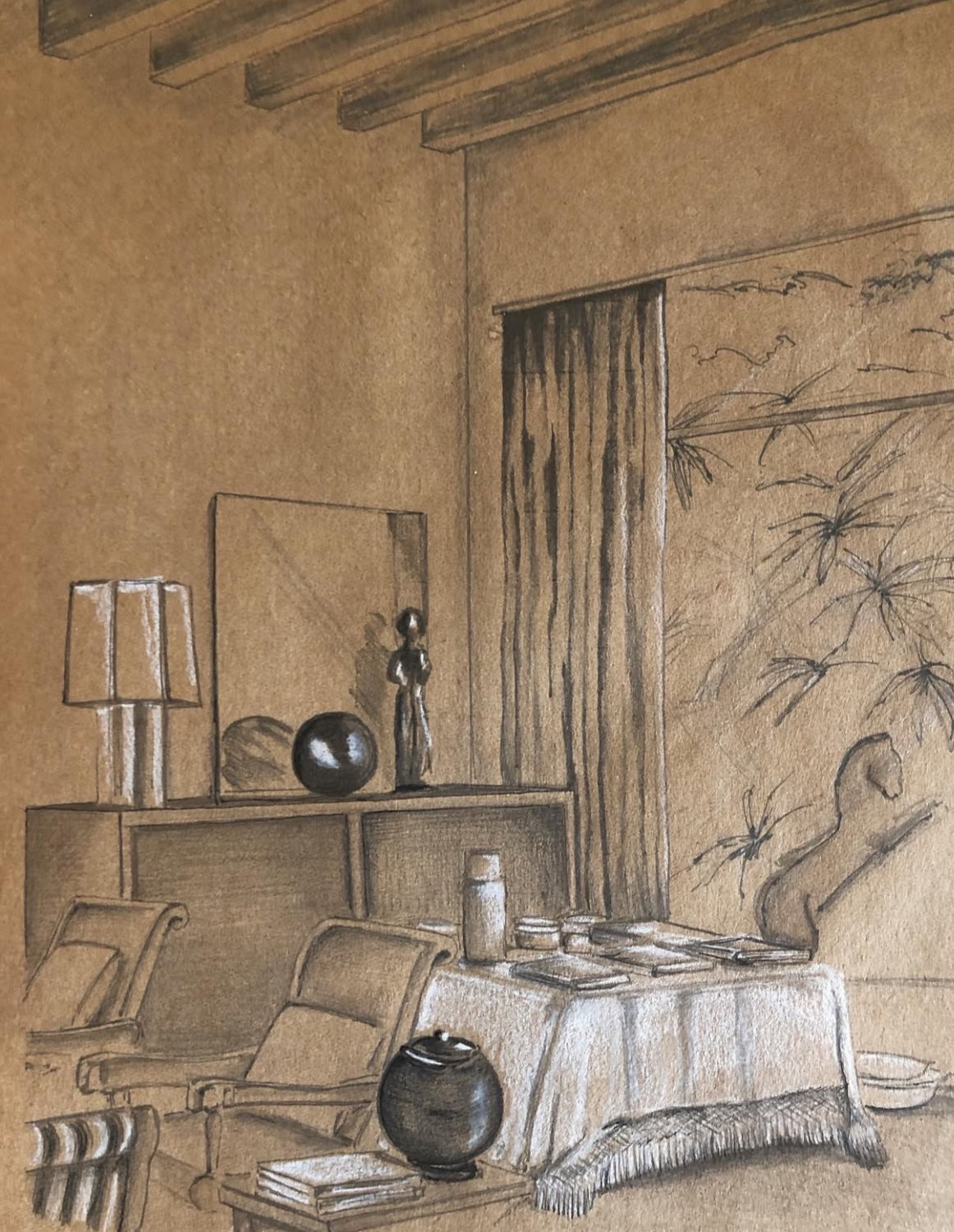
For design firms, clients usually provide me with developed plans and elevations, and my role becomes interpreting those technical drawings into sketches and renderings that communicate the atmosphere, intention, and feeling of the project to their clients. Each stage usually brings a different type of drawing.

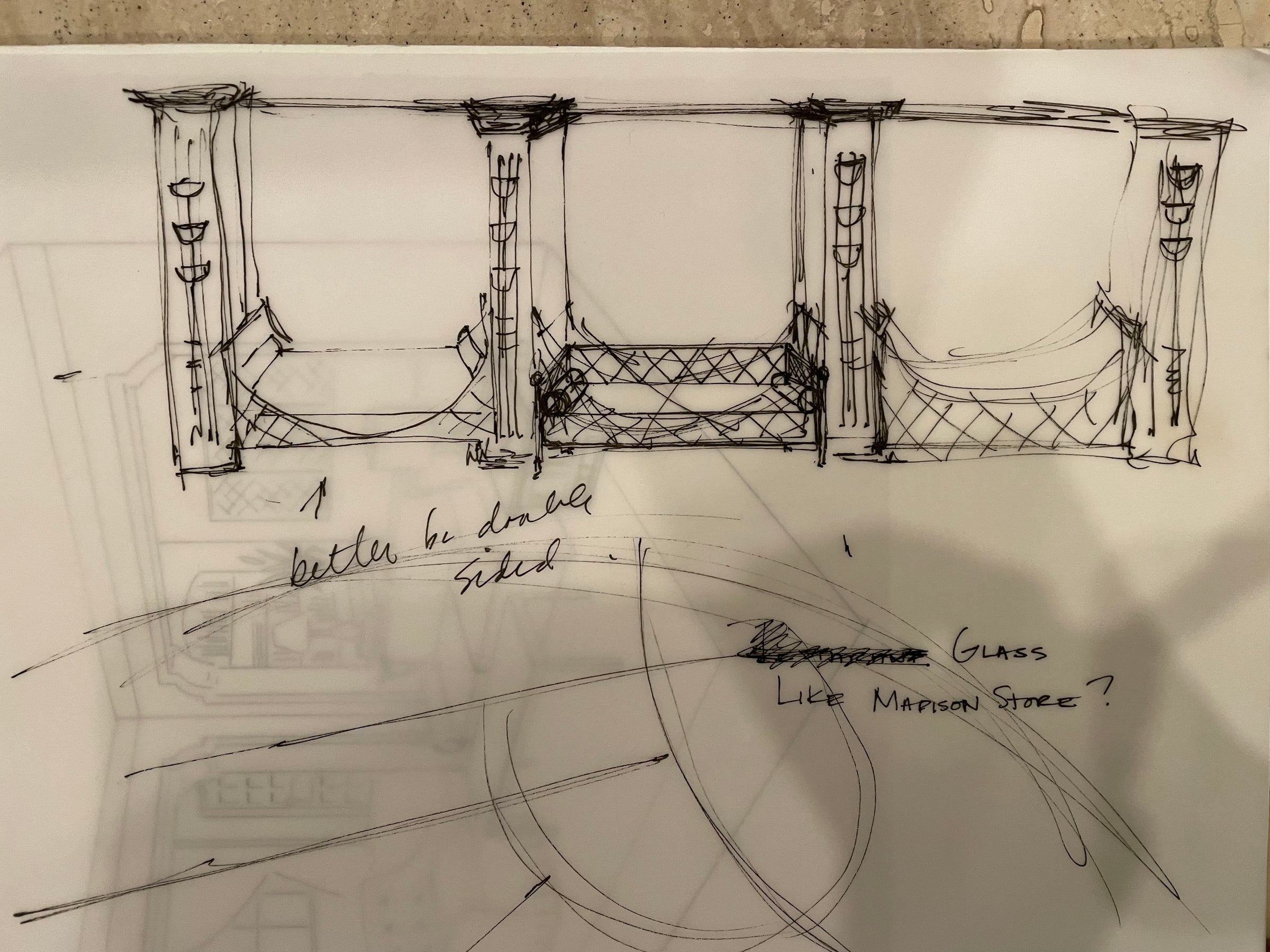
Process sketches tend to be loose and quick, and are often where dimensions, design flaws, and ideas are worked through in real time. I love collaborating in that phase with both designers and clients because it feels the most exploratory and open. Final presentation renderings become more refined and are meant to fully bring a space or design to life.

CR: A 3D render can be adjusted easily: a sofa changed, a wall colour softened, a layout moved slightly to the left, perhaps. A hand drawing carries a different kind of commitment. How do revisions work in your process, and what does that ask of the designer or client? 

ADC: It’s true that revising a hand-drawn illustration takes more time. I learned from my mentors to scan and archive each phase of a drawing as it develops, which is how architects and renderers have worked for decades. That process allows me to make adjustments when needed, and because most drawings are ultimately shared digitally, edits to materials, colors, or small details can usually be made quite easily before I print and rework the final piece by hand. If a client is presenting an original drawing or watercolor physically, I like to make sure we are fully aligned on the materials and overall direction beforehand.

Image credit: Amanda Doll Charrin

CR: Could you tell us a little about how you typically work? The materials and tools you reach for, how long a piece usually takes from brief to delivery, and what a working day looks like for you.

ADC: Of course. I’m a big collector of both antique and contemporary architectural supplies, and I think process is often shaped by the tools themselves. My go-to materials are a black Micron 02 steel tip pen, a classic Bic felt tip pen which was my father’s favorite, Staedtler HB, 2H, and 4H graphite pencils, and standard ivory résumé paper. For more architectural work, I still love drafting by hand with pencils and a Mayline, and I have a rare vintage drafting board and Mayline I found at auction that is a real treasure.

When I travel, I usually bring a small printer scanner, a triangle, and a T square with me. Most days look completely different from one another. As an interior designer, I’m often visiting sites and sourcing materials, but I almost always begin the day with a drawing. I find the quiet early mornings are when I can think most freely and be more creative in the moment before the interruptions of the day begin. Timing from brief to delivery depends on the scale of the project and clarity of the design. It's roughly about 1-2 weeks turnaround. 

CR: For a designer thinking about commissioning hand renderings for the first time, what should they put together before they get in touch: plans, elevations, materials, references? 

ADC: The more information I have the better. Whenever possible, I like to receive full plans and elevations, links to materials, and a design brief. It is also helpful to understand how the designer envisions the drawings themselves, whether they should feel more gestural and sketch-like in pencil or more refined and rendered with ink or watercolor. 

Image credit: Amanda Doll Charrin
Image credit: Amanda Doll Charrin for Athena Calderone

"Drawing by hand exercises a completely different part of the brain. We need that direct connection between hand, pen, and paper because it forces us to work through problems and troubleshoot ideas in real time."

CR: So much of the industry now runs on CGI and AI, and yet the appetite for analogue work has grown. Where do you see hand-drawn work going from here? Does it stay a specialism, or become part of the standard design process again? 

ADC: I’m excited to see more designers becoming confident in sketching by hand and less afraid to share the messy or imperfect parts of their process. Imperfection brings personality, intention, and humanity to a sketch, and that is what separates it from CGI or AI imagery. I want to encourage others to share their process because that is often where the most interesting ideas live.

Drawing by hand exercises a completely different part of the brain. We need that direct connection between hand, pen, and paper because it forces us to work through problems and troubleshoot ideas in real time. I think that is partly why we’ve seen such a quick shift away from overly polished CGI imagery and back toward sketching and more expressive forms of presentation.

CR: Every designer commissioning you has their own brand, their own visual language. How do you approach that translation? Does your hand adapt to each project, or is there a thread that runs through everything you draw? 

ADC: That is very true. I always begin with a pencil sketch, and then let the project itself dictate the direction of the medium, whether that becomes watercolor, ink, pencil, or something more layered. I try to respond to the style and spirit of the project rather than impose a singular drawing style, while keeping a common thread of my own hand throughout the work.

If a project has an Art Deco sensibility, I may lean into tools and techniques that feel reflective of that era. If it has more of a Dorothy Draper feeling, I might reference illustrators like Jeremiah Goodman and work more with watercolor and paint. At the moment, most clients want a classic pencil sketch style, which feels more architectural.

CR: How does the finished work usually reach the designer: scanned, refined digitally, presented in its original form, or somewhere in between? 

ADC: All of the above. I scan drawings and remove backgrounds to deliver a transparent PNG. That way the designer can use them on any background or material or design they like. I also provide the original physical drawing usually on ivory résumé paper and deliver them in a beautiful presentation box for their archives. 

CR: Most designers learned to sketch during their training, but many have not picked up a pencil in years. For someone who senses they should be drawing more, whether for their own practice or to communicate ideas with a client in the room, where would you tell them to begin?

ADC: I went almost twenty years without drawing consistently. In school, we naturally journal, sketch, and work through ideas because we always have pen and paper nearby, and I think reconnecting with that habit is important. A good place to start is simply buying a beautiful hardback notebook, adding a pen holder, and carrying a favorite pen or mechanical pencil with you so it becomes part of your daily life.

Don’t be afraid to make mistakes or fill pages with unfinished thoughts, notes, sketches, or ideas for things you want to design and build. I also think it helps to give yourself small exercises or projects, whether that’s practicing perspectives, experimenting with hatch marks, or simply drawing every day to rebuild the connection between hand and mind.

Image credit: Amanda Doll Charrin

To close, Amanda Doll Charrin's edit:

City or place /
I live in the countryside most of the time so cities like Paris or Milan.

Museum /
Fondation Maeght in Saint Paul de Vence.

Designer /
Jacques Grange then Billy Baldwin.

Somewhere the interior stayed with you /
The Four Seasons designed by Philip Johnson before it closed, or La Colombe d'Or , where I had my wedding.

First thing you notice in a room /
Walls. I love trims and moldings and textured wallpapers and lacquers. Second would be the hardware. It shows the project's attention to details.

What's always on your desk /
My notebooks and pens.

The one thing every designer should own /
The book that literally sums up all the great interior design and architecture tomes: 'Philosophy of Interior Design' by Stanley Abercrombie. I found it at an antique store and then applied to Parson's Interior Design program a few months later. I might reread it this summer as it always makes me remember why I love the craft. 

A source worth sharing /
A bronze shop in Venice where I like to source my unique hardware. It is more fun to go in person but you can always call and place orders or email them directly. Fonderia Artistica Valese. 

Headshot credit: Photography by Stas Komarovsky, Make-up by Cyndle Komarovsky