


The Layer You Forgot to Add
WORDS
Sharon Glover
Sharon Glover
THE PAPER
Conversation
Conversation
Is scent something you add to an interior, or something you can design with? We think carefully about almost every element of an interior, building layer upon layer while exercising restraint. Yet sometimes, like art, scent is left until the very end. We might add a candle to the coffee table or a diffuser in the bathroom, something to make a finished space feel complete.
Scent does something no other sense can. It can transport us instantly to a place, a person or a particular experience. Someone once told me that everywhere they visit, they buy a perfume and a book, spraying the perfume into the pages before they leave. Years later, opening the book brings the place back immediately.
At design fairs, we're increasingly noticing fragrance being treated less as an accessory and more as part of the environment itself. In Copenhagen, a lighting supplier took over a 200-year-old theatre and filled it with the barely perceptible scent of 'faded roses.' In a Salone installation, a fully dressed apartment used candles, lotions and fragrance throughout. There were dominoes half played on the table and shoes left by the bedroom chair. Scent was part of the identity of the space, not something added afterwards.
What if scent is chosen not as a finishing touch but as part of the experience of an interior from the very beginning, specified alongside materials and lighting? Is it too subjective to design with, and how do you get it right?
We spoke to Franky Rousell, founder of Jolie, about treating fragrance as part of the wider sensory narrative of an interior, and to Reyes Lezcano, General Manager of L'Artisan Parfumeur, about the relationship between fragrance, space and design.

Reyes Lezcano / L'Artisan Parfumeur
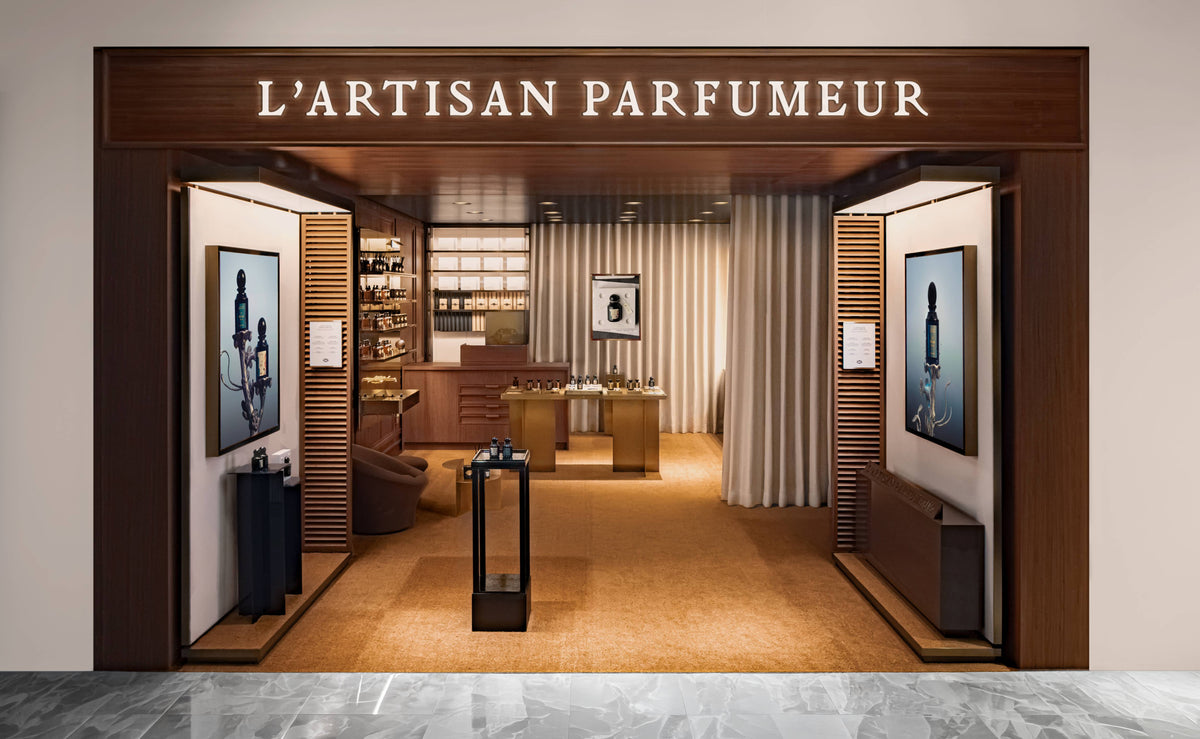
Reyes Lezcano is the General Manager of L'Artisan Parfumeur, a Parisian fragrance house founded in 1976. Their founder Jean Laporte described himself as a "parfumeur décorateur," someone for whom scent was inseparable from space.

Franky Rousell / Jolie
Franky Rousell is the founder and CEO of Jolie, an international interior design practice with studios in Manchester, London, and New York. The studio approaches design through a sensory first approach, drawing on neuroscience and behavioural research to shape how spaces are experienced.
Franky Rousell
Scent is clearly an important part of Jolie's approach to sensory design. Beyond the feeling you want a space to evoke, what practical considerations guide the selection of a fragrance for a project?
One of the most important considerations is understanding what other aromas might already be present within a space and how our chosen fragrance can work in harmony with them, rather than trying to compete with or disguise them. I remember working with an aromatherapist in Paris who told me about a project where he had been commissioned to fragrance a fire station. He explained that he had to consider the existing aroma of body perspiration almost as a base note, developing a fragrance that would complement the environment rather than simply trying to mask it. It’s quite an extreme example, but it really stayed with me because it demonstrates how we need to think about scent as another layer of the interior.
At JOLIE, we consider whether there are natural materials within a space, such as timber, that already emit their own distinctive aromas. Rather than introducing something entirely separate, we might look to amplify certain notes and build upon the existing sensory character of the environment. We always consider the scale of the space and the intensity of the fragrance. A smaller, more intimate environment might call for something lighter and fresher, or a lower concentration of fragrance oil within a candle or diffuser, whereas a larger space might allow for something with greater depth and projection. Ultimately, it’s about creating a fragrance that feels completely at home within its environment, rather than something that has simply been added as an afterthought.
Has a fragrance decision ever influenced another design decision - a material choice, lighting direction, or the wider atmosphere of a space?
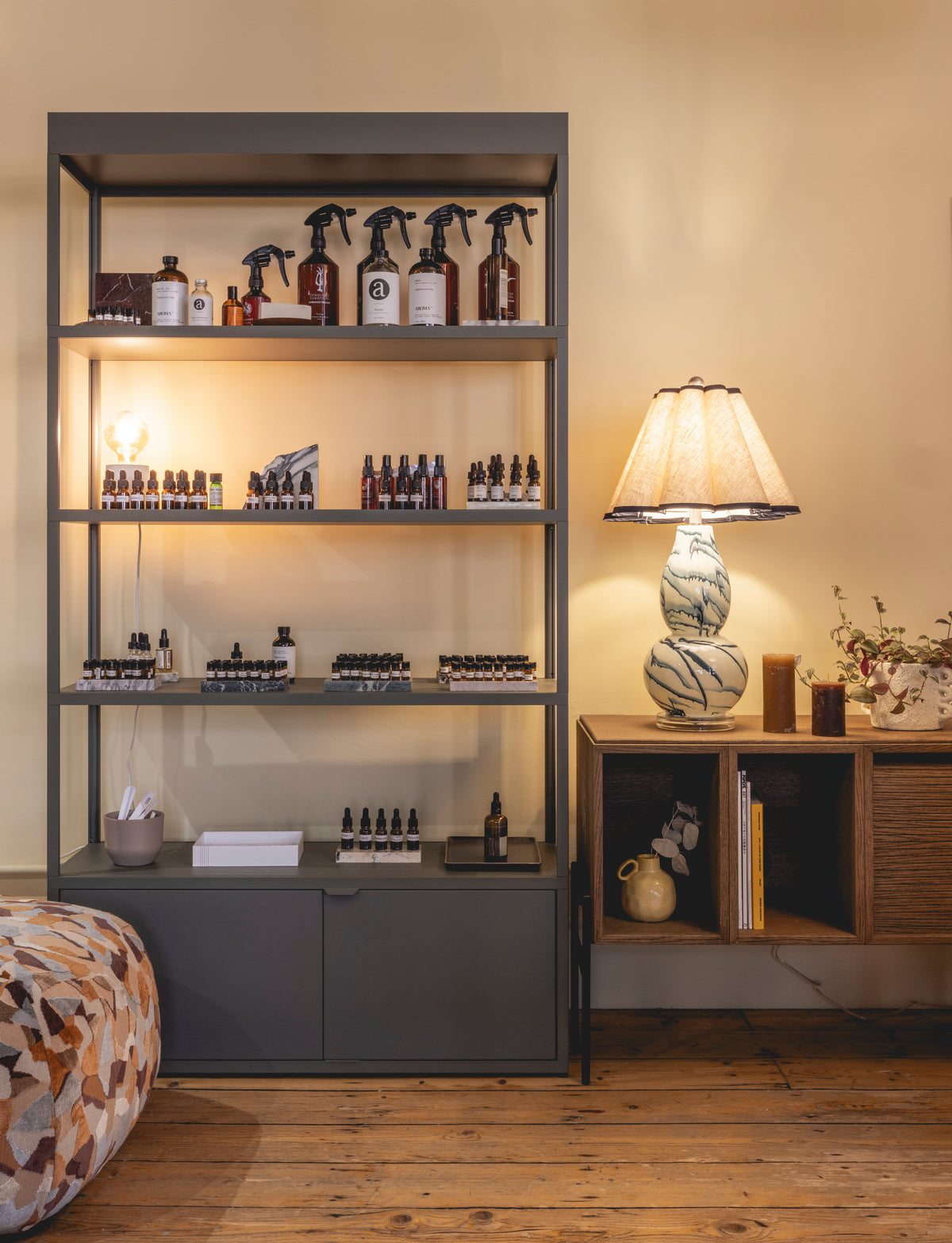
I think the most interesting interiors are those where the senses are working together to tell the same story. We don’t necessarily see fragrance as something that comes at the end of a project, once all the other design decisions have been made. We consider it as part of the wider sensory narrative from the outset. For example, if we’re developing an environment that we want to feel grounding and restorative, we might explore the relationship between woody, earthy fragrance notes and the physical materials within the space. Natural timber, textured stone, softer lighting and warmer tones can all work together to reinforce that same emotional experience. Equally, if we’re designing a space that we want to feel energising and uplifting, we might consider how fresher, more vibrant fragrance notes could complement a brighter lighting scheme, a more expressive material palette or a greater sense of openness.
I find it fascinating that our brains don’t experience each of our senses in complete isolation. The atmosphere of a space is shaped by the relationship between everything we’re seeing, smelling, hearing and touching. For me, the magic happens when those individual elements come together so naturally that you don’t necessarily notice them independently. You simply walk into a space and immediately feel something.

Scent has a unique ability to evoke memories and emotions, often in deeply personal ways. How do you balance your design intention with a client's own associations and experiences of scent?
One of the beautiful things about our approach is that every fragrance we specify is bespoke, created specifically for the environment it will inhabit. Whilst individual fragrance notes might evoke certain memories or associations for different people, a bespoke composition has its own unique identity. It is therefore less likely to carry the same immediate, deeply personal associations as encountering, for example, the exact perfume you wore during a particularly difficult period of your life, or a fragrance you strongly associate with a specific individual. There will always be nuances to how people experience scent, but creating something entirely bespoke allows us to develop a fragrance that feels familiar and comforting without being directly attached to an existing memory.
We’re also incredibly conscious of how we introduce fragrance into a space. Our approach is very subtle, almost subliminal. We don’t want scent to feel overpowering or overwhelming. Instead, it should be doing a quiet, gentle job in the background, contributing to the overall atmosphere without necessarily demanding your attention. Of course, a client’s own associations and experiences are an important part of that process, but we also spend a great deal of time understanding the demographics of the people who will inhabit or move through a space. Whether we’re designing a private residence, a hotel or a members’ club, we consider the people we’re designing for, their lifestyles, their sensory needs and the emotional experience we want to create for them. We can then tailor the fragrance composition around scent cues that support those needs, whilst ensuring that the space develops its own unique sensory identity. Ultimately, we’re not trying to recreate somebody else’s memory. We’re creating the sensory foundations for entirely new ones to be made.
Are there spaces where scent doesn't work, or situations where you would choose not to introduce fragrance into an interior?
I think there are relatively few environments where scent isn’t appropriate, but there are certainly spaces where we would be much more mindful of how and where we introduce it. Food-led environments are probably the most important example. Our senses of smell and taste are so closely connected that introducing fragrance into a restaurant can genuinely alter how we perceive the flavours of the food we’re eating. Without specialist care and attention, you could inadvertently change the experience of an entire menu. For this reason, we tend to pare back fragrance within dining spaces themselves and instead focus on key transitional moments, such as entrances and arrival areas. These are wonderful opportunities to introduce a signature fragrance that creates an immediate connection with the brand, whilst helping guests transition from the outside world into an entirely new feeling. It allows us to establish that emotional and sensory association without interfering with the dining experience itself.
We’re also mindful of environments where people might be exposed to fragrance for prolonged periods, such as bedrooms or individual workspaces within the home. Whilst we absolutely encourage people to enjoy the ritual of lighting a beautiful candle or introducing a soft reed diffuser into their home, we might choose not to incorporate a permanent scenting solution directly into these areas. Instead, we would dial down the intensity or introduce fragrance in a way that gives people greater control over their own sensory environment. Ultimately, it’s not necessarily about where scent does or doesn’t belong, but understanding how to use it with intention. Sometimes the most effective fragrance is one that you encounter for just a fleeting moment, yet it becomes an integral part of how you remember a space.
Reyes Lezcano
L'Artisan Parfumeur has become increasingly present within the design world, including events such as Salone. What does that relationship with the design community mean to you, and how do you think about your fragrances in the context of a designed space?
The relationship between fragrance and design is deeply rooted in L’Artisan Parfumeur. Jean Laporte, our founder, described himself as a parfumeur décorateur in the late 70s, an idea that already placed scent within a broader understanding of space. A space is shaped by what we see, but also by what we sense. Materials, forms and light define its visible identity; fragrance can define its invisible one. The Boule d’Ambre, one of the House’s earliest objects, already expressed this idea by bringing object, scent and space together. Fifty years later, this feels remarkably contemporary: fragrance as a way of crafting the invisible dimension of a space.
How does L'Artisan Parfumeur's relationship with nature inform the fragrances it creates?
Nature is a starting point for imagination at L’Artisan Parfumeur. The perfumer observes it, interprets it and transforms it, using what exists to imagine what could exist. Craftsmanship is what makes that transformation possible. It comes from a deep mastery of raw materials combined with the intuition of the perfumer as an artist. Creative freedom gives that intuition the space to go somewhere unexpected. This constant movement between real nature and imaginary nature is where the House finds its creative territory: creating unexpected scents that have never been smelled before.
How do you see the role of scent evolving within interior design, and what can fragrance bring to a space that other design elements cannot?
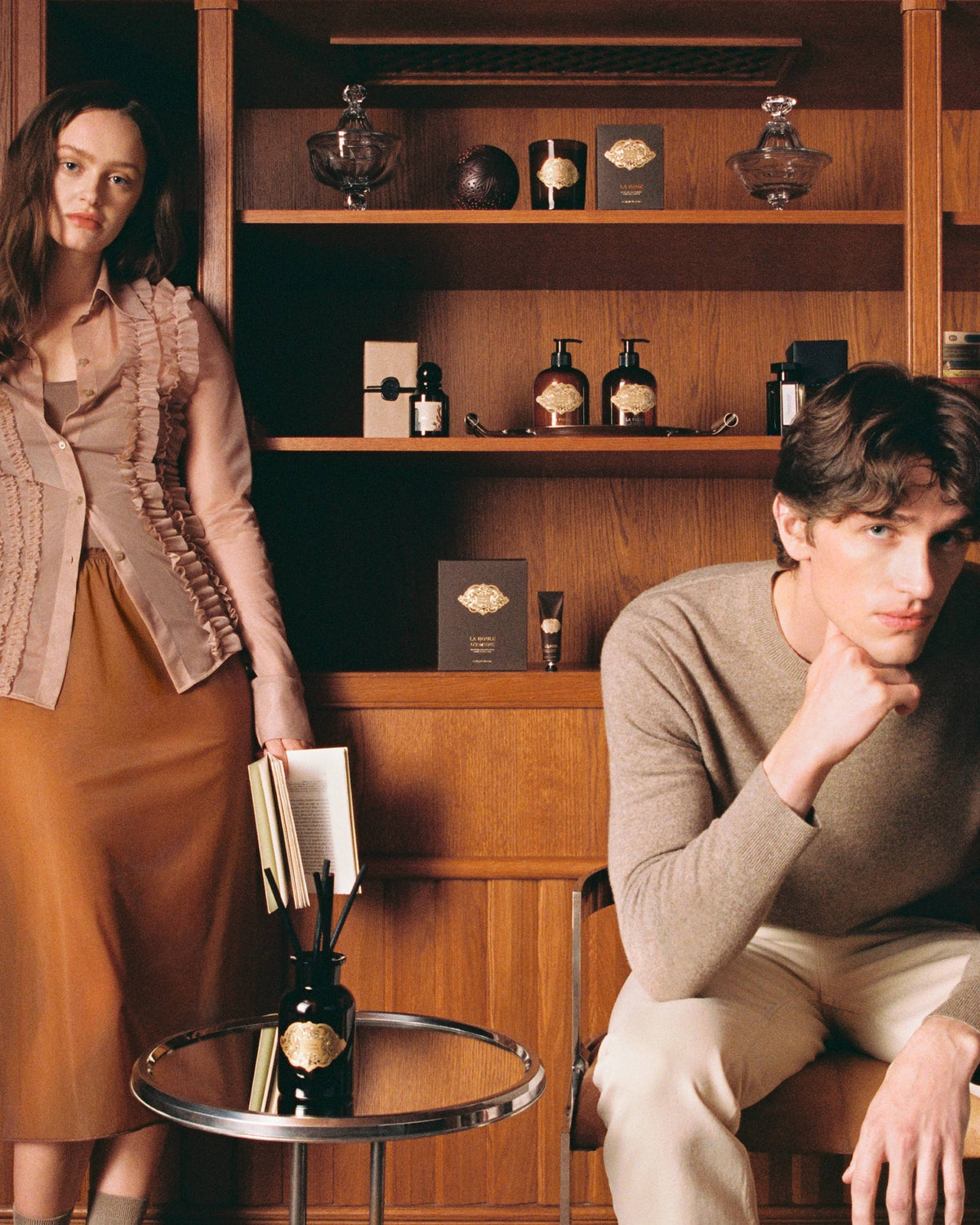
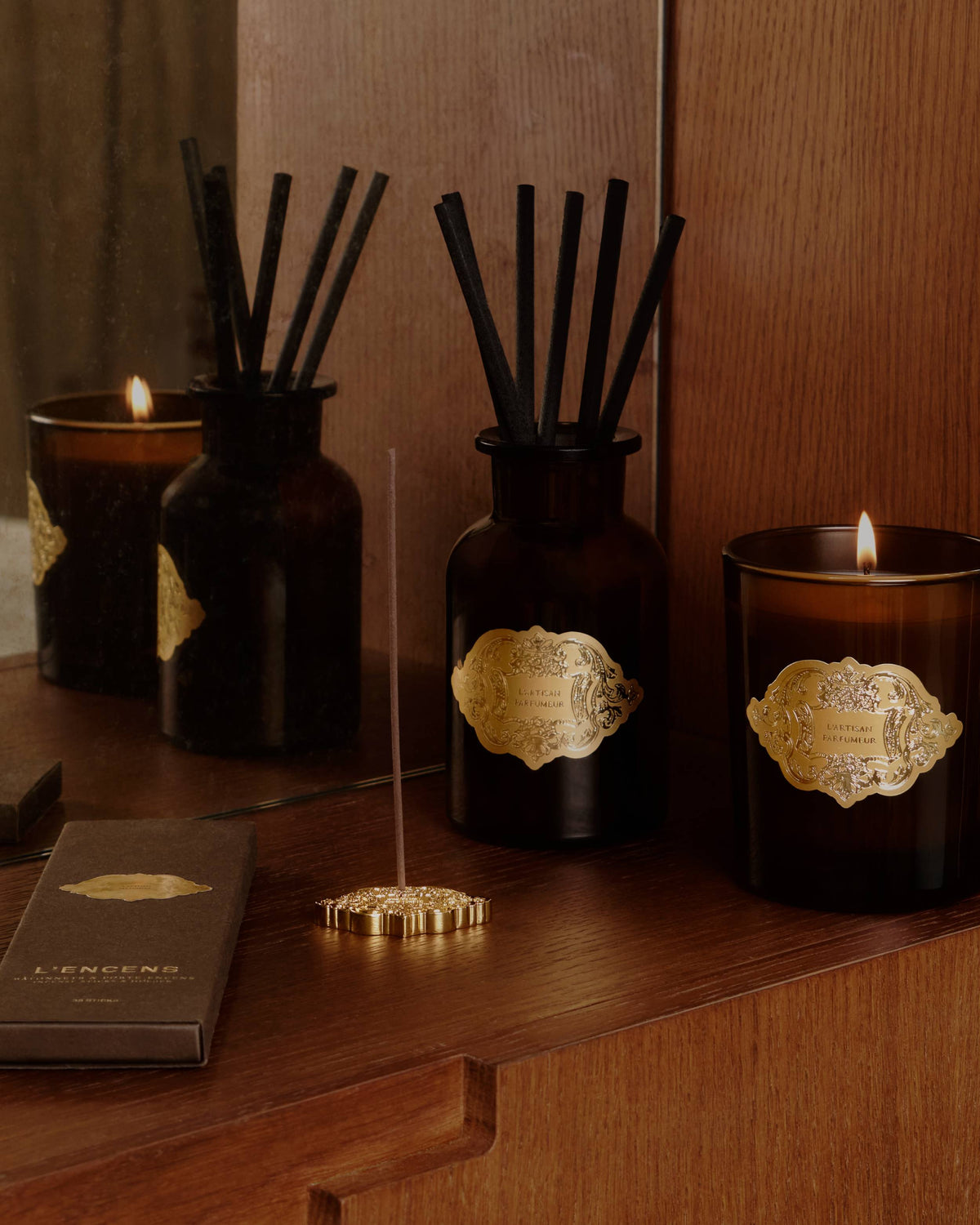
As our olfactory culture grows, the scents we choose for the spaces we inhabit will become increasingly intentional. The olfactory identity of a space will be considered with the same attention as its visual one, because both shape the way we experience it. Scent has the extraordinary ability to transform a space without occupying it. It inhabits the air we breathe and connects instinctively with emotion and memory. In that sense, it is perhaps the most intimate way of designing a space. This opens a new territory for design: imagining the objects, gestures and rituals through which scent becomes part of our environment, from incense and diffusion to forms yet to be invented. It is about giving form to the invisible.
Looking ahead, how would you like to see L’Artisan Parfumeur continue to engage with the design community, whether through collaborations, objects, or new ways of experiencing scent?
There is a shared language between design and perfumery. Both start with an idea and give it expression through materials, combining mastery with the freedom to explore new territories. This balance between craft and creative audacity feels very close to L’Artisan Parfumeur.
Collaborations can create a space where different disciplines inspire and challenge one another, opening new ways of experiencing fragrance, new rituals and new objects. The most exciting outcome is what emerges from that encounter: ideas that only become possible when the worlds of a perfumer and a designer collide.
More Reads

II / Conversation
Does Your Work Look Like Everyone Else's?

III / Conversation


